Most stores wire every popup signup into one welcome series. A shopper who spun a wheel for 20% off, a shopper who joined a back-in-stock waitlist, and a shopper who entered a giveaway all land in the identical five-email flow. They wanted three different things, and they get one generic answer. This is a walkthrough of the Shopify popup Klaviyo integration done properly — routing each signup to the flow that fits what they actually did.
The good news: the plumbing already exists. WooHoo syncs captured contacts straight into Klaviyo, and it passes along enough context to tell those contacts apart. The work is in deciding what to tag and which flows to build. Here's the setup, in order.
How the sync works
When a visitor completes a WooHoo popup — enters an email, plays a game, claims a code — that contact syncs to Klaviyo as a profile. Along with the email (and phone, for SMS captures), WooHoo passes properties describing the capture: which campaign it came from, which game or popup type, and the discount code that was issued. Those properties are what make routing possible. Without them, every contact looks the same to Klaviyo and one welcome series is the best you can do.
Connect the integration once from the WooHoo dashboard, authorize Klaviyo, and new captures start flowing in near-real-time. Existing captures don't need re-importing — the routing you build applies to everyone who signs up from that point on.
Sync the source, not just the email.
The single most useful thing you can do at setup is confirm the campaign or popup-type property is landing on the Klaviyo profile. That one field is what lets you say "this person spun the welcome wheel" versus "this person joined the VIP list" — and everything downstream depends on it.
Lists vs profile properties
Klaviyo gives you two ways to segment incoming contacts, and mixing them up is the most common setup mistake.
- Lists are explicit groups a contact belongs to — "Newsletter," "VIP early access." A contact is on a list or isn't. Use lists for durable membership you'll message deliberately.
- Profile properties are facts about the contact — "signup source: spin wheel," "first discount: 15%." Use properties to build segments dynamically and to trigger flows conditionally.
The clean pattern: send most captures to a single subscribers list (so your sending reputation and consent are managed in one place), and lean on properties to route them into the right flow. Reserve separate lists for genuinely distinct audiences — SMS vs email, wholesale vs retail — not for every popup variant.
The routing setup
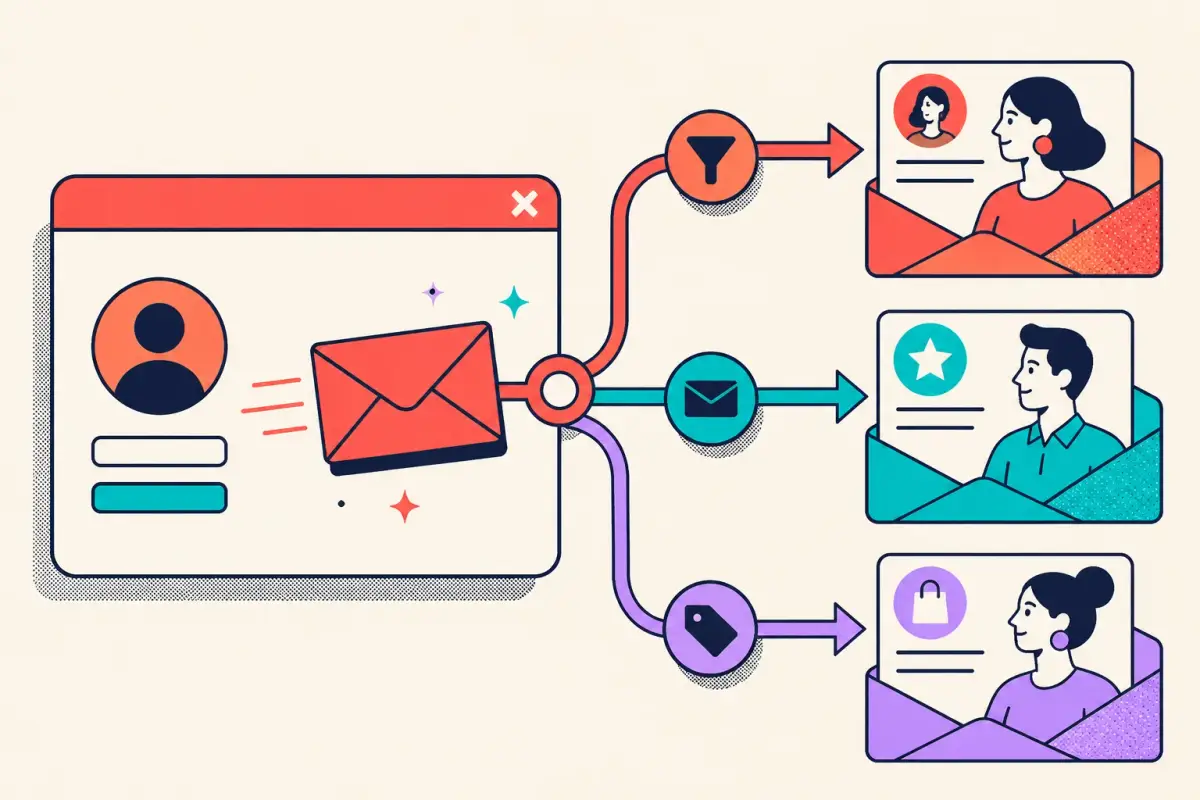
With the source property syncing, routing is a matter of building flows that trigger on it. The structure:
- Trigger on the list or a "signed up" event. The flow starts when a contact is added or the capture event fires.
- Split on the source property. Add a conditional split early: "signup source is spin wheel" down one path, "back-in-stock" down another, "giveaway" down a third.
- Deliver the code the shopper actually won. Because WooHoo passes the issued code as a property, your first email can reference the exact discount — not a generic "here's 10% off." That alone makes the welcome email feel like a continuation of the popup rather than a reset.
- Diverge the content. The wheel-winner gets a "your prize is waiting" nudge; the waitlist joiner gets product-availability updates; the giveaway entrant gets a softer, slower sequence.
You're not building five separate flows on day one. You're building one flow with a split, and giving each branch a reason to exist.
One welcome series treats a wheel-spinner and a waitlist-joiner as the same person. They opted in for different reasons — routing just lets you answer the reason they gave.
The flows worth building first
If you build nothing else, build these two, because they cover the majority of popup captures:
- The gamified welcome flow. For contacts whose source is a spin wheel, scratch card, or pick-a-gift. Email one confirms the exact code they won and links them back to shop it; email two reminds them before it expires; email three adds social proof. The energy of the game carries into the inbox instead of dying at the popup.
- The non-game welcome flow. For plain email captures — a newsletter box, a footer signup. Slower, more introductory, brand-first. These contacts didn't win anything, so the flow leads with who you are rather than with urgency.
Both depend on capturing the address in the first place. If your popups aren't pulling their weight, start with how to build your email list — the routing only matters once contacts are flowing in. And for a sense of what merchants see once the two connect, what real merchants report is worth a read.
Capture the email, tag the source, route the flow.
Build a gamified popup with WooHoo, connect Klaviyo in a click, and every signup arrives already labelled with the game it came from and the code it won.
Start with two
You don't need a routing map with a dozen branches. You need the source property syncing cleanly, one welcome flow split into "won a game" and "didn't," and the discipline to send each branch a message that matches why the shopper opted in. That's the whole win: the same list, answered in the shopper's own terms.
Frequently asked questions
Does WooHoo integrate with Klaviyo?
Yes. WooHoo syncs captured email and SMS contacts to Klaviyo as profiles, along with properties describing the capture — the campaign, the popup or game type, and the discount code issued. Connect it once from the WooHoo dashboard and new signups flow in automatically.
Should each popup have its own Klaviyo list?
Usually not. Keeping most captures on a single subscribers list makes consent and deliverability easier to manage. Use profile properties — like signup source — to route contacts into different flows instead. Reserve separate lists for genuinely distinct audiences, such as SMS versus email.
Which Klaviyo flow should I build first?
Build a gamified welcome flow for contacts who won a code from a spin wheel or scratch card, and a slower, brand-first flow for plain newsletter signups. Splitting on signup source and referencing the exact code the shopper won makes the first email feel like a continuation of the popup, not a reset.