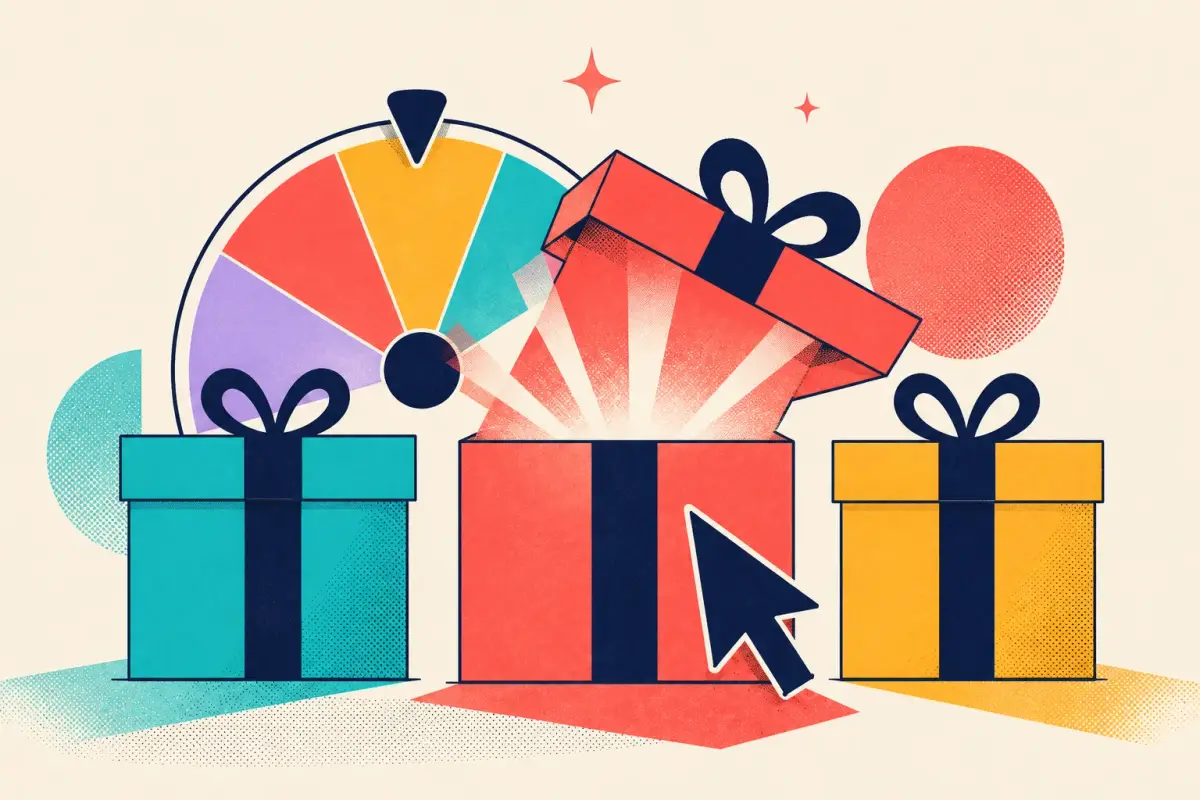
Both a spin-the-wheel and a pick-a-gift popup capture an email by turning the discount into a game. But they run on opposite psychology. A wheel is chance — the shopper surrenders control and gets the thrill of a random outcome. A pick-a-gift is choice — the shopper takes control and gets the reassurance of a decision they made. Chance thrills; choice reassures. Which one converts better depends entirely on your brand, your traffic, and your margins.
This isn't a contest with a single winner. It's a fit question. Below is how the two mechanics differ where it matters, so you can pick the one your store should run — or run both and target them.
The psychological split
The wheel's engine is anticipation. You type an email, you spin, and for two seconds the outcome is out of your hands. That uncertainty is the pull — variable rewards hold attention in a way fixed ones can't, and almost landing the big prize is more motivating than reliably winning a small one. It's high-energy and a little bit slot-machine, and that's the point.
The pick-a-gift popup runs on agency. Three or four wrapped boxes; the shopper chooses one and reveals what's inside. There's still a reveal, still a small thrill — but the shopper made a decision, and a reward you chose feels more earned and less like a machine handed it to you. It's calmer, more deliberate, and it flatters the shopper's sense of control instead of overriding it.
A wheel says "let's see if you get lucky." A gift box says "pick the one you want." Same email captured, two completely different feelings — and different shoppers reward each.
Brand-tone fit
This is where most of the decision lives. The wheel's carnival energy is a gift to fast-fashion, beauty, impulse, and high-volume stores — categories where a discount-driven first purchase is a normal, expected motion. On those brands the wheel feels fun and on-tone.
On a premium, considered, or design-led brand, that same carnival can read as desperate — the visual equivalent of a flash sale. Pick-a-gift keeps the game but drops the fairground. Wrapped boxes and a single calm choice sit far more comfortably next to a brand that competes on taste rather than on price. If your storefront works hard to not look like it discounts, the gift picker is the mechanic that lets you gamify without breaking that promise.
Discount visibility and margin
The two mechanics expose your offer differently, and that has a real margin consequence.
- The wheel shows every slice. The shopper sees the whole prize board — including the biggest number — before they spin. That transparency is part of the thrill, but it also anchors expectations on the top prize, even when the odds of landing it are deliberately low.
- Pick-a-gift hides the contents. The prizes are concealed until the box is opened, so no single number dominates the shopper's expectation. That gives you more control over how generous the offer feels versus how generous it actually is — useful when you're protecting margin.
Neither is dishonest when the odds and prizes are set fairly. But if you want to gamify without waving your deepest discount in front of every visitor, the gift picker's concealment is the friendlier tool.
How each behaves on mobile
Both are strong on phones, but differently. The wheel is a gesture — a thumb flick and a spin animation — which feels great on touch and benefits from a light haptic tick. Pick-a-gift is a tap: choose a box, reveal. The tap is simpler and arguably more reliable on small screens, with less that can feel cramped. Neither has a decisive mobile edge; both beat a static form comfortably.
Run the one that fits your brand.
Build a spin-the-wheel or a pick-a-gift popup with WooHoo — same email capture, your choice of feeling — and A/B test them against each other on your own traffic.
Which to pick
A short rule. If your brand is high-volume, price-forward, or impulse-driven — beauty, fashion, gadgets, seasonal — run the discount spin wheel; the energy is on-tone and the thrill converts. If your brand is premium, considered, or competes on taste — home goods, design, luxury-adjacent — run pick-a-gift; the agency and the calm fit the promise you're making everywhere else.
And if you're not sure, don't guess — test. Run both against each other on your real traffic and let conversion, redemption, and how each feels next to your brand decide. The best mechanic is the one your shoppers reward and your brand can live with.
Frequently asked questions
Is pick-a-gift better than spin-the-wheel?
Neither is universally better — they fit different brands. Spin-the-wheel runs on chance and high energy, which suits fast-fashion, beauty, and impulse stores. Pick-a-gift runs on choice and calm, which suits premium, considered, and design-led brands that don't want to look like they discount. Match the mechanic to your brand tone.
Which gamified popup converts better?
On raw opt-in, both beat a static email form comfortably, and the gap between them is store-specific. The wheel's uncertainty tends to pull harder on impulse traffic; the gift picker's agency reassures more considered shoppers. The honest answer is to A/B test both on your own audience rather than trust a universal number.
Does pick-a-gift protect margin better than a wheel?
It can. A wheel shows every prize slice, including the biggest, before the spin, which anchors expectations on the top number. Pick-a-gift conceals the prizes until a box is opened, so no single number dominates — giving you more control over how generous the offer feels versus how generous it is.